
Powered by Smartsupp
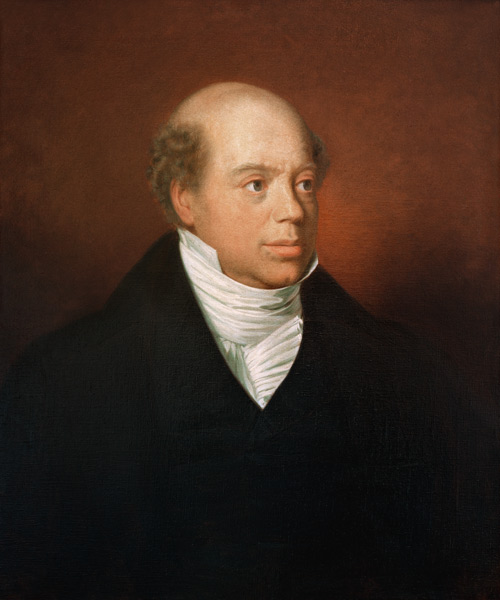
Portrait of Nathan Mayer Rothschild

Nathan Mayer Rothschild

1777–1836

Banker, Businessman, Investors
Birth Date
September 16, 1777
Death Date
July 28, 1836
Birthplace
Frankfurt
Death Place
Frankfurt
Nationality
Germany-British
Family Branch
London
Occupation
Banker, Businessman, Investors

Overview

Our London founder — Nathan established N M Rothschild & Sons, at the centre of 19th-century European finance.
Nathan Mayer Rothschild (16 September 1777 – 28 July 1836) was a German-born British merchant, banker and financier and the founder of the Rothschild banking business in Britain. He was the third son of Mayer Amschel Rothschild, founder of the Rothschild financial dynasty.

Nathan moved from Frankfurt to England in 1798, initially establishing himself as a textile merchant in Manchester. In 1809, he moved into banking in London and established N M Rothschild at New Court, which became one of the most important financial houses in nineteenth-century Britain.

He became particularly influential through international finance, government loans, foreign exchange, bullion trading and financing Britain's military operations during the Napoleonic Wars. He died in Frankfurt in 1836 at the age of 58.

Full Biography

Nathan Mayer Rothschild was born in Frankfurt am Main on 16 September 1777, then part of the Holy Roman Empire. He was one of the five sons of Mayer Amschel Rothschild and Gutle Schnapper.

His father deliberately positioned his sons in different European financial centres so that the family could establish an international business network. Nathan was sent to England, where he first worked in Manchester's textile trade before moving to London and becoming a banker.

In Manchester, Nathan developed a successful wholesale textile business. He used ready cash to purchase large quantities of textiles directly from manufacturers and arranged for them to be distributed across continental Europe. This helped him build both capital and commercial contacts.

In 1809, Nathan established N M Rothschild at New Court, St Swithin's Lane, in the City of London. The business increasingly focused on foreign exchange, bullion, securities and government finance.

During the Napoleonic Wars, his financial network became especially valuable to the British government. In 1814–1815, his firm received a major contract to purchase and transport gold coin for Arthur Wellesley's (the Duke of Wellington's) army on the European continent. After Napoleon's defeat, the Rothschild house also handled British subsidy payments to Britain's European allies.

Nathan's financial position continued to expand during the 1820s. In the financial crisis of 1825, the Rothschild house supplied gold to help support the Bank of England when its reserves came under severe pressure.

By the time of his death in 1836, Nathan had established the London Rothschild business as a major international financial institution. His sons subsequently continued the business as N M Rothschild & Sons.

Early Life

Nathan was born into the Rothschild family in Frankfurt on 16 September 1777.

The family lived in Frankfurt's Jewish quarter, the Judengasse, where his father had built a successful business as a merchant and financial agent. Nathan grew up in an environment in which commerce, finance and international relationships were central to family life.

As a young man, Nathan was prepared for a commercial career rather than an academic profession. His father's larger strategy was to send his sons to different European markets and have them build interconnected businesses.

In 1798, Nathan left Frankfurt for Britain. He initially settled in Manchester, which was rapidly becoming an important centre of the British textile industry.

Family Background

Nathan was the third son of Mayer Amschel Rothschild (1744–1812) and Gutle Schnapper (1753–1849).

His four brothers were:

Amschel Mayer Rothschild – remained in Frankfurt.
Salomon Mayer Rothschild – established the family's Austrian/Viennese branch.
Nathan Mayer Rothschild – established the British branch.
Carl Mayer Rothschild – established the family's Naples branch.
James Mayer de Rothschild – established the French branch in Paris.

The five brothers eventually created an interconnected European banking network spanning Frankfurt, London, Vienna, Naples and Paris.

Their father's strategy was important because it allowed the family to transfer information, money and financial instruments between different European markets more efficiently.

Education

Nathan did not attend a university or receive the kind of formal academic education associated with later members of the Rothschild family.

His education was primarily commercial and practical, developed through his father's business environment and his own experience as a merchant.

His time in Manchester was particularly important to his development. He learned about:

International trade
Textile markets
Foreign exchange
Commodity prices
Credit
Shipping and distribution
Commercial finance

His practical experience eventually provided the foundation for his transition from merchant to international banker.

Career

Manchester textile merchant

Nathan arrived in Manchester in 1798 and established his first Manchester premises in 1799.

He initially acted on behalf of his father's business, helping distribute British textiles to continental European markets. He later began trading independently.

The Rothschild Archive notes that Nathan used a high-turnover, relatively modest-margin approach and bought textiles directly from manufacturers, helping him build his capital rapidly.

London banker

Nathan increasingly turned toward financial services and moved to London.

In 1809, he established N M Rothschild at New Court, St Swithin's Lane. The Manchester textile operation was subsequently wound down so that he could concentrate on banking.

International financier

Nathan became involved in:

Government borrowing
Foreign exchange
Bullion trading
International payments
Government securities
European finance

His firm's international network gave it access to information and financial resources across several European markets.

Financing Britain's war effort

One of Nathan's most important financial roles came during the Napoleonic Wars.

In 1814–1815, his London house received the British government's contract to purchase and transport gold coin to finance Wellington's forces on the European continent. After Napoleon's defeat, the firm also handled British subsidy payments to European allies.

Later career

Nathan continued expanding the London business throughout the 1820s and 1830s.

The firm issued numerous British and foreign government loans. The Rothschild Archive records 26 British and foreign government loans between 1818 and 1835.

Business Activities

Nathan's principal business activities included:

Banking

He founded N M Rothschild in London in 1809, creating the foundation for what became N M Rothschild & Sons.

Government finance

His firm became heavily involved in arranging and distributing government loans. This became one of the major activities of the London Rothschild house.

Bullion trading

Gold and precious-metal transactions were an important part of Nathan's business, particularly during wartime.

Foreign exchange

Nathan's international connections allowed his firm to conduct foreign-exchange transactions across European markets.

Military finance

His firm purchased and transported gold to finance Wellington's forces during the Napoleonic Wars.

Insurance

In 1824, Nathan and Moses Montefiore helped establish the Alliance Assurance Company, which subsequently became an important British insurance business.

Support for the Bank of England

During the financial crisis of 1825, the Rothschild house made a substantial gold payment that helped support the Bank of England during a run on its reserves.

Historical Context

Nathan's career developed during one of Europe's most turbulent periods.

Napoleonic Wars

The Napoleonic Wars created enormous demand for international financial services. Governments needed to move money, obtain bullion, borrow funds and make payments to armies and allies.

Nathan's international network was particularly useful in this environment.

Growth of London as a financial centre

During Nathan's lifetime, London was becoming one of the world's leading financial centres. The City of London provided opportunities for merchants and bankers who could connect British capital with international markets.

Nathan established his business at New Court, a location that remained associated with the London Rothschild business for generations.

Expansion of international banking

The Rothschild brothers' businesses in Frankfurt, London, Vienna, Naples and Paris created an unusually interconnected European banking network.

Nathan's London operation became one of the most important components of this network.

Financial crises

The financial crisis of 1825 demonstrated the importance of banks capable of moving substantial amounts of gold and capital quickly. The Rothschild house participated in efforts that helped stabilize the Bank of England.

Personal Life

Nathan married Hannah Barent Cohen in October 1806. She was the daughter of Levi Barent Cohen, a prominent member of London's Jewish community.

Hannah became an important part of Nathan's personal and family life and was also involved in aspects of his business. The Rothschild Archive records that she handled correspondence and orders and signed cheques for the Manchester firm.

Nathan and Hannah had seven children:

Charlotte Rothschild (1807–1859)
Lionel Nathan de Rothschild (1808–1879)
Anthony Nathan de Rothschild (1810–1876)
Nathaniel de Rothschild (1812–1870)
Hannah Mayer Rothschild (1815–1864)
Mayer Amschel de Rothschild (1818–1874)
Louise Rothschild (1820–1894)

His son Lionel Nathan later became senior partner of the London firm after Nathan's death.

Nathan lived with his family at several residences, including New Court, Stamford Hill, 107 Piccadilly and later Gunnersbury Park.

In June 1836, Nathan travelled to Frankfurt for the wedding of his son Lionel. He became seriously ill there and died on 28 July 1836, aged 58. His death marked the end of the first generation of leadership of the London Rothschild house, but his sons continued and expanded the business.

Interesting Facts

Nathan Mayer Rothschild's historical importance came from his transformation from a Manchester textile merchant into one of Britain's leading nineteenth-century merchant bankers. He established the London Rothschild branch, developed major international financial operations, participated in British wartime finance and created the foundation upon which N M Rothschild & Sons subsequently developed.