Powered by Smartsupp
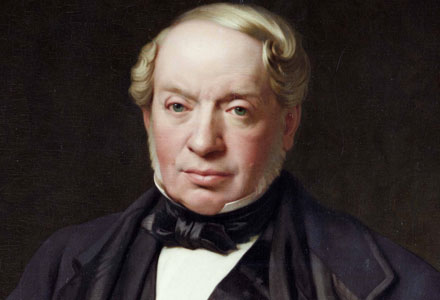
Portrait of James Mayer de Rothschild

James Mayer de Rothschild

1792–1868

Banker, Businessman
Birth Date
May 15, 1792
Death Date
November 15, 1868
Birthplace
Paris, France
Death Place
Paris
Nationality
French
Family Branch
Paris
Occupation
Banker, Businessman

Overview

Our founder of the French branch — James established de Rothschild Frères in Paris.

James Mayer de Rothschild was the youngest son of Mayer Amschel Rothschild, founder of the Rothschild banking dynasty. Born in Frankfurt in 1792, he moved to Paris as a young man to establish the family's French operation.

Initially, he worked as an agent for his brother Nathan Mayer Rothschild, helping coordinate the movement of bullion and funds during the Napoleonic Wars. He eventually established de Rothschild Frères, which became one of Europe's most important banking houses.

His bank financed governments, infrastructure, railways and industrial development. He was also involved in mining, investment, art collecting and wine. He acquired Château Lafite in 1868, shortly before his death.

Full Biography

James Mayer de Rothschild was born Jakob Mayer Rothschild on 15 May 1792 in Frankfurt am Main, then part of the Holy Roman Empire. He was the fifth and youngest son of Mayer Amschel Rothschild and Gutle Schnapper Rothschild.

His father had established the foundations of the Rothschild family's financial network in Frankfurt. Mayer Amschel deliberately placed his sons in major European commercial centres so that the family could operate an interconnected international banking network.

James was sent to Paris, where his older brother Nathan's interests required a representative. From the age of 19, James coordinated the purchase of specie and bullion for Nathan. During 1814–1815, he played an important role in Nathan's efforts to provide funds for the armies of the Duke of Wellington during the final stages of the Napoleonic Wars.

After establishing himself permanently in Paris, James created the family's French banking house, de Rothschild Frères. By the 1820s, the bank had become an important financier of the French government.

James subsequently expanded into government finance, railways, mining and other commercial activities. He became an adviser and financial intermediary for governments and European political leaders.

He was also a major patron of the arts and assembled an important collection of paintings and other works. His purchase of Château Lafite in 1868 added one of Europe's most prestigious wine estates to the Rothschild family's holdings.

James died in Paris on 15 November 1868, only a few months after purchasing Lafite. His sons inherited and continued his banking and business interests.

Early Life

James grew up in the Judengasse of Frankfurt, the Jewish quarter in which the Rothschild family lived and conducted business.

He was born into a family that was already becoming financially prominent. His father, Mayer Amschel, developed relationships with wealthy clients and rulers and gradually built a successful banking and financial business.

James received both traditional Jewish education and instruction in modern subjects, including foreign languages and literature. This was somewhat broader than the traditional education received by some of his older brothers.

The family environment emphasized commerce, financial discipline and cooperation between brothers. This would become fundamental to the Rothschild international banking system.

Family Background

Father

Mayer Amschel Rothschild (1744–1812) was the founder of the Rothschild banking dynasty.

Mother

Gutle Schnapper Rothschild (1753–1849) was Mayer Amschel's wife and the mother of their ten children.

Brothers

James was the youngest of five sons:

Amschel Mayer Rothschild — Frankfurt
Salomon Mayer Rothschild — Vienna
Nathan Mayer Rothschild — London
Carl Mayer Rothschild — Naples
James Mayer Rothschild — Paris

This geographical division was deliberate. The five brothers established or led Rothschild operations in major European financial centres, creating an interconnected international network.

James therefore became the family's representative in Paris, while his brothers operated in Frankfurt, London, Vienna and Naples.

Marriage

In 1824, James married Betty de Rothschild, the daughter of his brother Salomon. They had five children: one daughter and four sons.

Their children included:

Charlotte de Rothschild (1825–1899)
Mayer Alphonse de Rothschild (1827–1905)
Gustave Samuel James de Rothschild (1829–1911)
Salomon James de Rothschild (1835–1864)
Edmond James de Rothschild (1845–1934)

His sons subsequently became important figures in the continuation of the French Rothschild business.

Education

James did not attend a modern university in the way many nineteenth-century European elites did.

Instead, his education was largely provided through private tutoring and the family's commercial environment.

According to the Deutsche Biographie, he received traditional Jewish education alongside instruction in foreign languages and literature.

His most important practical education came through working within the Rothschild family business.

His move to Paris at 19 effectively became an apprenticeship in international finance. Working directly for Nathan exposed him to:

International payments
Bullion trading
Government finance
Currency transfers
Cross-border banking
War finance

These experiences prepared him to establish and lead the Paris branch.

Career

Early banking career

James arrived in Paris in 1811 as an agent for his brother Nathan.

His early responsibilities included coordinating the purchase of gold, silver and bullion for Nathan's London operation.

During the Napoleonic Wars, he became involved in the financial arrangements that helped provide funds for Wellington's armies.

Establishment of the Paris bank

James eventually established the family's permanent Paris operation, de Rothschild Frères.

The bank became increasingly important during the post-Napoleonic period. By 1823, the Paris house was firmly established as a banker to the French government.

Government finance

James became a major financier to European governments.

His activities extended beyond France and included financial operations involving countries such as Belgium, Spain, Austria and the United States. He also participated in financing connected with the emerging Greek state and Italian political developments.

Political connections

His financial importance brought him into close contact with political leaders.

He became an adviser to French ministers and monarchs and was particularly connected with the financial affairs of King Louis-Philippe.

He was also appointed Austrian consul general in Paris in 1821, demonstrating the diplomatic importance of his financial network.

Business Activities

James's business empire extended far beyond conventional banking.

Banking

His most important business was de Rothschild Frères, the Paris Rothschild bank.

It financed government borrowing and major commercial projects and eventually became one of the most important banking institutions in France.

Railways

James was a major supporter of the development of railways in France and Europe.

He became associated with the Compagnie des chemins de fer du Nord, for which he obtained a concession in 1843. The railway became one of the most successful railway companies in France.

Railway investment was particularly important because nineteenth-century Europe was undergoing rapid industrialization. Railways required enormous amounts of capital, creating opportunities for investment banks such as Rothschild's.

Mining and industry

James and his banking network also participated in financing mining and industrial development. These investments helped connect Rothschild finance with the industrialization of France and continental Europe.

Château Lafite

One of his most famous non-banking acquisitions was Château Lafite in Bordeaux.

James had been interested in the estate for years. In August 1868, representatives acting for him purchased Lafite and the neighbouring Carruades estate for a combined 4.44 million francs.

However, James did not have much time to enjoy the acquisition. He died on 15 November 1868, only months after buying it, and according to the Rothschild Archive he never set foot on the property.

Art collection

James was also a major art collector.

His collection began with his purchase of Greuze's La Laitière in 1818. He subsequently acquired numerous paintings through major Parisian art sales, building a substantial collection.

Historical Context

James lived through one of the most transformative periods in European history.

Napoleonic Wars

He entered international finance during the Napoleonic Wars, when governments desperately needed financing, supplies and reliable international payment networks.

The Rothschild brothers' presence in several European financial centres gave them an unusual ability to transfer money across borders.

Restoration of European monarchies

After Napoleon's defeat, European governments needed enormous amounts of capital to rebuild their finances.

This created opportunities for James's Paris bank to become an important government financier.

Industrial Revolution

James's career coincided with the rapid development of the Industrial Revolution.

Banking increasingly moved beyond traditional merchant activities toward financing:

Railways
Mining
Industrial companies
Government infrastructure
International trade

James's investments in railways and mining placed the Rothschild bank directly within this transformation.

Rise of modern investment banking

James helped establish the model of a large nineteenth-century European banking house that could simultaneously finance governments, corporations and infrastructure projects.

The Paris house he created remained under Rothschild family leadership for generations. The Rothschild Archive records the succession of leaders from James through Alphonse, Édouard, Guy, and eventually the modern French Rothschild organization.

Personal Life

James married Betty de Rothschild in 1824.

The couple became famous for their lavish social life in Paris. They entertained politicians, aristocrats, artists and other members of European high society.

The Rothschild Archive describes James and Betty as entertaining on a grand scale, initially in Paris and later at their estates, including Ferrières.

James was known for having a strong personality. Contemporary accounts described him as intelligent, energetic and witty, but also demanding and sometimes sharp-tongued.

He remained strongly attached to his extended family and to the family's Jewish traditions.

Death

James died in Paris on 15 November 1868, aged 76.

His death occurred only a few months after his acquisition of Château Lafite. His three surviving sons—Alphonse, Gustave and Edmond—inherited the Lafite property and continued the family's financial and business activities.

Legacy

James Mayer de Rothschild is arguably one of the most important figures in the history of the Rothschild family. He transformed the family's presence in France from a small Paris operation into a major European financial institution. His bank helped finance governments and industrial development, particularly the expansion of railways and mining.

His legacy continued through his children and descendants, and the Paris banking house he founded remained in the Rothschild family for more than a century. Today's Rothschild & Co ultimately traces part of its French institutional history back to the Paris house established by James.