
Powered by Smartsupp
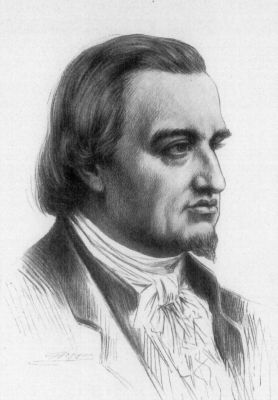
Portrait of Mayer Amschel Rothschild

Mayer Amschel Rothschild

1744–1812

Founder
Birth Date
February 23, 1744
Death Date
September 19, 1812
Birthplace
Frankfurt
Death Place
Frankfurt
Nationality
Germany
Family Branch
Frankfurt
Occupation
Founder

Overview

Our founding patriarch — the man who established our banking dynasty in Frankfurt in the 18th century.

Mayer Amschel Rothschild (23 February 1744 – 19 September 1812) was a German-Jewish banker, merchant and financial entrepreneur from Frankfurt am Main. He is widely regarded as the founder of the Rothschild banking dynasty.

Starting from a relatively modest position as a coin and antique dealer, Mayer Amschel developed relationships with wealthy clients and members of the German nobility. His most important relationship was with Wilhelm, Elector of Hesse-Kassel, whose court became one of his major clients.

Mayer Amschel and his wife, Gutle Schnapper, had ten children. He deliberately positioned his five sons in major European financial centres:

Amschel Mayer — Frankfurt
Salomon Mayer — Vienna
Nathan Mayer — London
Carl Mayer — Naples
James Mayer — Paris

This network allowed the family to conduct financial business across Europe and became the foundation of the international Rothschild banking system.

Full Biography

Mayer Amschel Rothschild was born on 23 February 1744 in Frankfurt, in the Jewish quarter known as the Judengasse. He was the son of Amschel Moses Rothschild, a merchant and money changer, and Schönche Rothschild.

His family was not originally one of Europe's great banking dynasties. Mayer Amschel's rise was the result of his own commercial ability, relationships and strategic expansion.

After losing both parents while still young, he was sent to Hannover, where he received training in banking and commerce. There he worked with the financial firm of Simon Oppenheimer, gaining knowledge of international finance.

When he returned to Frankfurt, he established himself as a dealer in coins, medals and antiques. Through this business he developed relationships with members of the aristocracy.

One of his most important clients became Wilhelm, Elector of Hesse-Kassel. Mayer Amschel eventually became a court factor and financial adviser to the Elector's household.

His business expanded from trading into financial services, including the management and transfer of money for wealthy clients.

The most important part of Mayer Amschel's legacy, however, was the system he created through his five sons. Rather than keeping the business concentrated in Frankfurt, he sent his sons to different European financial centres.

His son Nathan established the London operation, Salomon worked in Vienna, Carl in Naples, James in Paris, while Amschel remained in Frankfurt.

By the time Mayer Amschel died in 1812, the foundations of what would become one of Europe's most influential banking families had already been established.

Early Life

Mayer Amschel was born into the Jewish community of Frankfurt am Main.

His father, Amschel Moses Rothschild, worked as a merchant and money changer. The family lived in the Judengasse, where Jewish residents were subject to restrictions imposed by the city authorities.

Mayer Amschel's childhood was difficult. His parents died while he was still young, leaving him without the traditional support of his parents during his formative years.

Despite these circumstances, he developed an interest in commerce, money and valuable objects.

His early exposure to merchants and financiers helped him understand how money, credit and trade operated.

Family Background

Mayer Amschel came from a Jewish family that had lived in the Frankfurt area for generations.

Parents

Father: Amschel Moses Rothschild
Mother: Schönche Rothschild

His family was involved in commerce and money changing rather than being members of the aristocracy.

Marriage

In 1770, Mayer Amschel married Gutle Schnapper, the daughter of Wolf Salomon Schnapper.

Their marriage became the foundation of the Rothschild family.

They had ten children:

Five sons
Amschel Mayer Rothschild (1773–1855)
Salomon Mayer Rothschild (1774–1855)
Nathan Mayer Rothschild (1777–1836)
Carl Mayer von Rothschild (1788–1855)
James Mayer de Rothschild (1792–1868)
Five daughters

The daughters married into other prominent Jewish families, helping extend the Rothschild family's social and commercial network.

Education

Mayer Amschel did not receive a university education.

His early education took place within the Jewish community of Frankfurt.

Following the death of his parents, he was sent to Hannover, where he received practical training in commerce and finance.

He worked with the Oppenheimer banking firm in Hannover. This experience was extremely important because it introduced him to:

Banking
Foreign currencies
Government finance
International trade
Credit
Precious metals
Financial correspondence

His education was therefore primarily practical and commercial, rather than academic.

This training helped him later establish his own business in Frankfurt.

Career

Beginning as a dealer

After returning to Frankfurt, Mayer Amschel established himself as a coin and antique dealer.

He traded valuable coins, medals and other collectibles. This business brought him into contact with wealthy collectors and members of the aristocracy.

Becoming a court factor

Mayer Amschel's major breakthrough came through his relationship with the House of Hesse-Kassel.

He became a court factor and financial intermediary for Wilhelm IX, Landgrave of Hesse-Kassel, who later became William I, Elector of Hesse.

This gave Mayer Amschel access to a much larger financial network.

Expansion into banking

His business gradually expanded beyond trading.

He began providing financial services to wealthy clients and governments, including:

Money transfers
Currency exchange
Loans
Government financing
Management of financial assets
International payments

By the end of his life, he had established a substantial financial business in Frankfurt.

Business Activities

Banking and finance

Banking became the central part of Mayer Amschel's business.

He used his relationships with aristocratic clients to obtain financial contracts and gradually expanded his reputation as a reliable financial intermediary.

Government finance

His relationship with the Hesse-Kassel court was particularly important.

The Rothschild business became involved in managing and transferring funds belonging to wealthy rulers.

This type of government and aristocratic finance became an important part of the Rothschild family's later success.

International money transfers

Mayer Amschel understood the importance of moving money between different European countries.

His sons eventually created offices in major European cities, allowing the family to transfer information and funds more efficiently than many competing businesses.

Precious metals

The Rothschild business also dealt in gold and silver.

The family's expertise in precious metals became particularly valuable during periods of war when governments needed reliable access to bullion.

Building the family network

Perhaps Mayer Amschel's most important business decision was to establish a family-based international financial network.

Historical Context

Mayer Amschel lived during a period of enormous political and economic change in Europe.

The Enlightenment

He was born in 1744, during the European Enlightenment, when ideas about commerce, science, government and society were changing.

European monarchies

Much of Europe was still ruled by monarchies and aristocratic governments.

These governments frequently required large amounts of money to finance armies, wars and administration. This created opportunities for financiers.

French Revolution

The French Revolution began in 1789, when Mayer Amschel was already an established businessman.

The political instability that followed created enormous financial challenges for European governments.

Napoleonic Wars

The rise of Napoleon Bonaparte transformed Europe.

Wars disrupted trade and created a huge demand for reliable financial networks.

Mayer Amschel's sons became increasingly involved in international finance during this period, particularly Nathan in London.

Expansion of European banking

The late eighteenth and early nineteenth centuries saw the development of increasingly sophisticated international banking networks.

Mayer Amschel's family system was particularly well suited to this environment because information and money could be transferred through family members operating in different countries.

Personal Life

Mayer Amschel married Gutle Schnapper in 1770.

The couple lived in Frankfurt and raised their large family in the city's Jewish community.

Gutle played an important role in maintaining the family's household and social relationships. Their home became associated with the growing Rothschild business.

Mayer Amschel was known for maintaining close relationships with his clients and for placing considerable importance on family cooperation and trust.

He also established principles for the family's business that emphasized cooperation among relatives.

Death

Mayer Amschel Rothschild died on 19 September 1812 in Frankfurt, aged 68.

He was buried in the Jewish cemetery in Frankfurt.

His death did not end the business he had created. Instead, his five sons continued expanding it across Europe.

Legacy

Mayer Amschel Rothschild's greatest achievement was not simply accumulating wealth. It was creating an international family financial network that could operate across national borders.

His five sons transformed his Frankfurt business into a European banking network spanning:

Frankfurt → Vienna → London → Naples → Paris

This network became one of the most important private banking organizations of nineteenth-century Europe.

His descendants subsequently became involved in banking, investment, railways, mining, wine, agriculture, property, philanthropy and the arts.