Powered by Smartsupp
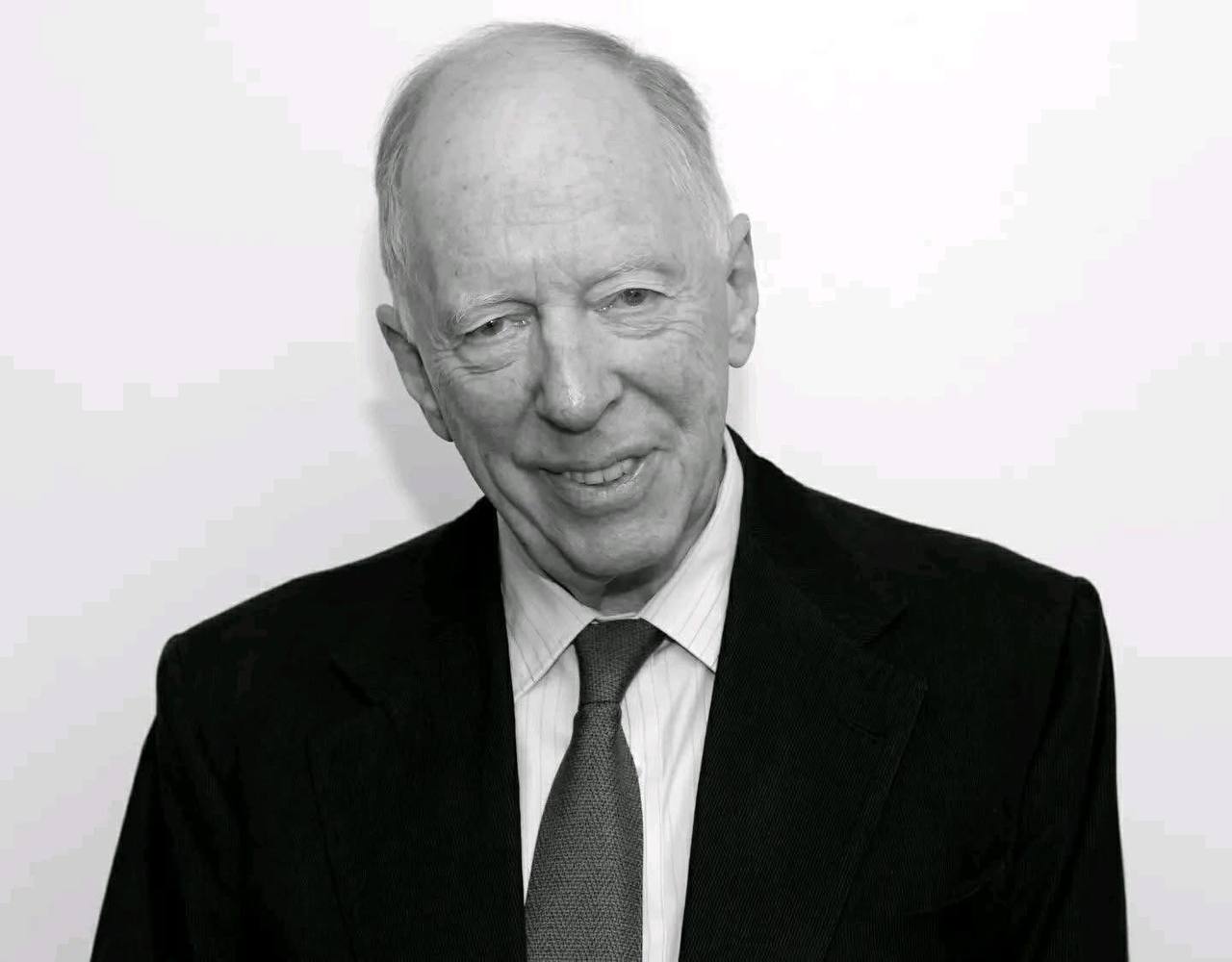
Portrait of Nathaniel Charles Jacob Rothschild

Nathaniel Charles Jacob Rothschild

also known as Jacob Rothschild

1936–2024

Financier, Investor, Philanthropist4th Baron Rothschild, Co-founder, Deputy Chairman
Birth Date
April 29, 1936
Death Date
February 26, 2024
Birthplace
Cambridge, England
Death Place
Enland
Nationality
British, England
Family Branch
London
Occupation
Financier, Investor, Philanthropist

Overview

Jacob Rothschild was the eldest son of Victor, 3rd Baron Rothschild, and Barbara Judith Rothschild. He was educated at Eton College and Christ Church, Oxford, where he studied history and achieved a First.

He joined the family's London banking house, N M Rothschild & Sons, in 1959 and became a partner in 1963. However, in 1980, he left the traditional family bank and pursued an independent career in investment management.

His most important achievement was developing Rothschild Investment Trust, later renamed RIT Capital Partners, into a major publicly listed investment company. He also co-founded J. Rothschild Assurance, now St. James's Place, with Sir Mark Weinberg.

Beyond finance, Jacob became a major patron of British art, heritage, museums and philanthropy. He chaired the National Gallery, the National Heritage Memorial Fund and the Heritage Lottery Fund, and played an important role in the restoration and management of Waddesdon Manor.

Full Biography

Nathaniel Charles Jacob Rothschild was born on 29 April 1936 in Cambridge, England. He was the eldest son of Nathaniel Victor Rothschild, 3rd Baron Rothschild, and Barbara Judith Rothschild, née Hutchinson.

He belonged to the British branch of the Rothschild family, descended from Nathan Mayer Rothschild, who established the family's London banking business in the early nineteenth century.

Jacob grew up during a period of enormous political and economic change. His childhood and youth were shaped by the Second World War, the reconstruction of Britain and the transformation of the British financial system.

After Eton and Oxford, he entered the family banking business. He joined N M Rothschild & Sons in 1959 and became a partner in 1963. During this period, he worked alongside other members of the family, including Sir Evelyn de Rothschild.

However, Jacob eventually decided to pursue a different direction. In 1980, he left N M Rothschild & Sons and took independent control of the Rothschild Investment Trust, which he developed into what became RIT Capital Partners.

Under his leadership, RIT grew substantially. According to RIT Capital Partners, when Jacob retired from its board in 2019, the company's net asset value had increased from approximately £5 million to more than £3 billion, and the company had become listed on the London Stock Exchange.

Jacob's business interests expanded beyond investment management. In 1991, he co-founded J. Rothschild Assurance Group with Sir Mark Weinberg, which subsequently became St. James's Place plc. He also became involved in media, energy, property and international investment.

At the same time, he developed a remarkable second career as a philanthropist and supporter of the arts and heritage.

He was chairman of the National Gallery from 1985 to 1991 and chairman of the National Heritage Memorial Fund from 1992 to 1998. He subsequently chaired the Heritage Lottery Fund, overseeing the distribution of approximately £1.2 billion in grants to heritage projects.

He also became deeply associated with Waddesdon Manor, the Rothschild family's historic estate in Buckinghamshire. After inheriting the estate from his cousin Dorothy de Rothschild in 1988, he helped oversee its restoration and development in cooperation with the National Trust.

Jacob died on 26 February 2024. His only son, Nathaniel Philip Victor James Rothschild (Nat Rothschild), subsequently became the 5th Baron Rothschild.

Early Life

Jacob was born into one of Britain's most prominent financial families.

His father, Victor Rothschild, was the 3rd Baron Rothschild and a distinguished scientist as well as a member of the British establishment. His mother, Barbara Judith, came from the Hutchinson family.

Jacob's childhood coincided with the approach and outbreak of the Second World War. He grew up in an environment combining finance, science, politics, culture and public service.

The Rothschild family's London banking house, N M Rothschild & Sons, was already more than a century old when Jacob joined it. The bank had been established by his ancestor Nathan Mayer Rothschild at New Court in London in 1809.

This family history gave Jacob an early connection to the world of finance, although his later career would ultimately take him beyond traditional family banking.

Family Background

Father

Nathaniel Victor Rothschild, 3rd Baron Rothschild (1910–1990) was a scientist, businessman and member of the British House of Lords.

Although Victor belonged to the Rothschild banking family, his principal professional interests were in science and research, rather than traditional banking.

Mother

Barbara Judith Rothschild, née Hutchinson, was Jacob's mother.

Siblings

Jacob had siblings and half-siblings, including Emma Rothschild, the historian and academic, and Amschel Rothschild.

Wife

In 1961, Jacob married Serena Mary Dunn, a granddaughter of Canadian financier Sir James Hamet Dunn. Serena became known as Serena, Lady Rothschild.

Children

Jacob and Serena had four children:

Hannah Mary Rothschild
Beth Matilda Rothschild
Emily Magda Rothschild
Nathaniel Philip Victor James Rothschild, commonly known as Nat Rothschild

Nat became the 5th Baron Rothschild following Jacob's death in 2024.

Education

Jacob received his early education at Eton College, one of Britain's most prestigious schools.

He then attended Christ Church, University of Oxford, where he studied history. He achieved a First-Class degree and was taught by the distinguished historian Hugh Trevor-Roper.

His education in history proved useful throughout his later career, particularly in his work involving:

Art
Museums
Heritage
Historic buildings
Philanthropy
Cultural preservation

Career

N M Rothschild & Sons

Jacob joined N M Rothschild & Sons in 1959.

In 1963, he became a partner in the family banking business.

At the time, the London bank was transitioning from its traditional nineteenth-century model toward a more modern financial institution.

The bank was led by members of the family including Edmund de Rothschild, Sir Evelyn de Rothschild and Jacob himself during the 1960s and 1970s.

Departure from the family bank

In 1980, Jacob left N M Rothschild & Sons.

This was a major turning point because he began developing an independent investment business rather than continuing within the traditional family banking structure.

RIT Capital Partners

Jacob took control of the Rothschild Investment Trust, which eventually became RIT Capital Partners plc.

He served as chairman from 1971 to 2019, according to RIT Capital Partners, and oversaw its development into a major investment trust.

RIT invested internationally across different asset classes and markets, providing Jacob with a platform for global investment rather than conventional commercial banking.

J. Rothschild Assurance

In 1991, Jacob and Sir Mark Weinberg founded J. Rothschild Assurance Group.

The company later became St. James's Place plc, a major British wealth-management company.

Other corporate positions

Jacob also held a number of senior corporate positions.

He served as:

Deputy Chairman of BSkyB from 2003 to 2008
Director of RHJ International
A director of other investment and business organizations
An adviser and participant in international investment ventures.

Business Activities

Jacob's business interests were exceptionally broad.

Investment management

His principal business achievement was RIT Capital Partners.

The company invested internationally and diversified across different sectors and asset classes. Jacob's investment philosophy emphasized diversification and long-term capital preservation.

Financial services

He co-founded J. Rothschild Assurance, which became St. James's Place.

Private investments

Jacob maintained numerous private investment interests, including:

Venture capital
Property
Energy
Oil
International businesses
Media

He served as Deputy Chairman of BSkyB, demonstrating his involvement beyond conventional financial services.

International investments

Jacob developed relationships with investors and business leaders across Europe, North America, the Middle East and other international markets.

His career therefore represented a shift from the traditional Rothschild model of merchant banking and government finance toward modern investment management and diversified global investing.

Historical Context

Jacob's life spanned almost nine decades and several major transformations in Britain and global finance.

Second World War

He was born in 1936, shortly before the Second World War. His generation experienced the transformation of Europe and Britain following the war.

Post-war British finance

When Jacob entered N M Rothschild & Sons in 1959, Britain's financial system was still dominated by traditional institutions and family-controlled financial businesses.

The Rothschild London bank itself had existed since 1809, when Nathan Mayer Rothschild established the London operation at New Court.

Modernization of finance

During the 1960s and 1970s, financial markets became increasingly sophisticated and international.

Jacob's eventual decision to leave N M Rothschild & Sons in 1980 reflected this changing environment. His subsequent development of RIT Capital Partners placed him firmly within the emerging world of modern investment management.

Global investment

By the late twentieth century, investors increasingly looked beyond their home countries.

Jacob built an international investment portfolio and developed relationships throughout the global financial community.

Arts and heritage

Another major feature of his historical importance was the growing role of wealthy private individuals in preserving Britain's cultural heritage.

Jacob became one of the country's most influential cultural philanthropists, working with institutions such as the National Gallery, National Trust, British museums and heritage organizations.

Personal Life

Jacob married Serena Mary Dunn in 1961. They remained married until Serena's death in 2019.

They had four children, with their son Nat Rothschild eventually inheriting the family title.

Jacob was also deeply interested in art, architecture, history and heritage.

One of his most important personal projects was Spencer House, the eighteenth-century London townhouse that he helped restore.

He also played a major role in the preservation of Waddesdon Manor, which he inherited from his cousin Dorothy de Rothschild in 1988. Under his stewardship, the estate became an important cultural and heritage destination.

Jacob was also involved in philanthropic work connected with Israel and Jewish heritage, including the Rothschild Foundation and Yad Hanadiv.

Death

Jacob Rothschild died on 26 February 2024, aged 87.

His death marked the end of the career of one of the most influential members of the modern British Rothschild family. His son Nat succeeded him as the 5th Baron Rothschild.

Achievements

• Transformed Rothschild Investment Trust into RIT Capital Partners, a major international investment company.
• Co-founded J. Rothschild Assurance, which later became St. James’s Place.
• Served as Chairman of the National Gallery.
• Chaired the National Heritage Memorial Fund and Heritage Lottery Fund.
• Played a major role in the preservation and development of Waddesdon Manor.
• Helped restore and preserve Spencer House in London.
• Supported numerous educational, cultural, Jewish and humanitarian causes.
• Received the Order of Merit, one of Britain’s highest honours, for his contributions to public life.
• Built a reputation as an influential international investor and philanthropist.

Legacy

Jacob Rothschild’s legacy lies in his lasting influence on finance, philanthropy, arts and heritage. He helped move the Rothschild family’s financial tradition toward modern investment management while becoming a major supporter of British cultural and historical preservation. His work with RIT Capital Partners, Waddesdon Manor and various charitable foundations continued to influence the institutions he supported.